




Rate limiting is one of the most important systems behind modern platforms, APIs, and automation tools. It helps prevent spam, maintain platform stability, and ensure a smooth user experience by controlling how many actions can occur within a specific timeframe. In this guide, we'll explore how rate limiting works, why it matters for Instagram DM automation, and how solutions like LinktoDM use intelligent pacing and queue systems to scale conversations safely.
What is Rate Limiting?

Rate limiting is a mechanism that controls how many actions, requests, or messages can be performed within a specific period of time.
Think of it as traffic control for digital systems. Instead of allowing unlimited activity, platforms place limits on requests to prevent spam, abuse, and server overload. Once a user, application, or automation system reaches the allowed limit, additional requests may be delayed, queued, or temporarily blocked until the limit resets.
Examples include:
- Sending too many Instagram DMs
- Making excessive API requests
- Posting hundreds of comments within minutes
- Triggering thousands of automated responses simultaneously
Today, rate limiting is used across social media platforms, SaaS applications, cloud services, payment gateways, and APIs to ensure reliable performance.
Why Do Platforms Use Rate Limiting?

Without rate limiting, digital platforms would be vulnerable to abuse and performance issues. Here are the main reasons platforms rely on rate limiting.
Prevent Spam
Rate limits stop users and bots from sending massive volumes of messages, comments, or requests within a short period.
Protect Infrastructure
Millions of actions occur every second across modern platforms. Rate limiting helps distribute traffic evenly and prevent server overload.
Improve User Experience
Users expect reliable performance. Limiting excessive activity helps ensure everyone gets a consistent experience.
Reduce Abuse
Rate limiting plays a critical role in preventing automated attacks, scraping, credential stuffing, and malicious bot activity.
Maintain Fair Usage
Rate limits ensure that a small number of users cannot consume a disproportionate amount of system resources.
How Rate Limiting Works
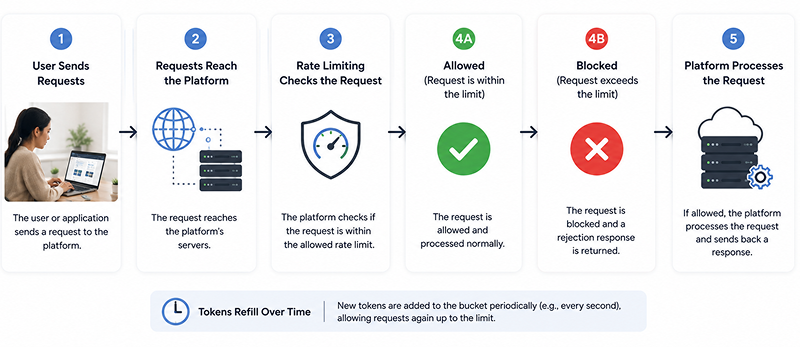
At its core, rate limiting tracks how many actions occur within a specific time window.
Examples include:
- 50 requests per minute
- 500 API calls per hour
- 1,000 messages per day
When the threshold is reached, the system may:
- Reject new requests
- Delay requests temporarily
- Place requests into a queue
- Wait until the limit resets
This creates a controlled and predictable flow of traffic rather than sudden spikes.

Real-World Examples of Rate Limiting
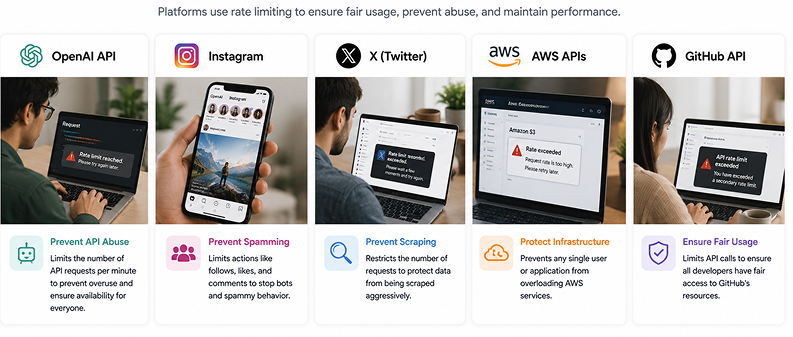
Rate limiting is used everywhere, often without users even realizing it.
Instagram limits actions such as DMs, comments, follows, and API requests to prevent spam and protect users.
Businesses using WhatsApp automation often encounter messaging limits designed to maintain platform quality.
OpenAI APIs
API rate limits help distribute computing resources fairly across developers and applications.
Login Systems
Many websites limit login attempts to protect against brute-force attacks.
Payment Gateways
Payment providers use rate limiting to prevent abuse and ensure secure transaction processing.
These examples show that rate limiting is not just a social media concept — it's a fundamental part of modern software infrastructure.
What Happens When You Hit Rate Limits?

When rate limits are exceeded, platforms typically respond in one of several ways.
Temporary Restrictions
Users may be prevented from performing certain actions for a short period.
Request Delays
Requests may be queued and processed later.
Error Responses
Systems may return warnings indicating that too many requests have been made.
Reduced Throughput
The platform may intentionally slow activity until traffic returns to acceptable levels.
Repeated violations can sometimes affect account reputation and increase the likelihood of future restrictions.
Rate Limiting in Instagram DM Automation

Rate limiting is especially important in Instagram DM automation. Imagine a creator posts a viral Reel that receives thousands of comments within hours. If every triggered DM attempted to send instantly, it could create massive spikes in messaging activity.
This is where intelligent automation becomes essential. Modern DM automation systems use message pacing, traffic distribution, and queue management to ensure conversations are delivered reliably without overwhelming the platform.
For businesses running lead generation campaigns, webinar registrations, product launches, or downloadable resource funnels, rate limiting is often the difference between scalable automation and operational issues.
Common Mistakes That Trigger Rate Limits

Many users unintentionally create problems by focusing only on speed.
Sending Messages Too Quickly
Attempting to send thousands of messages at once creates unnatural activity patterns.
Ignoring Traffic Spikes
Viral content can generate far more activity than expected.
Overcomplicated Automation Flows
Long DM sequences often create unnecessary messaging volume.
Aggressive Automation
Automating every possible interaction can increase the risk of hitting platform limits.
Using Poorly Designed Tools
Not all automation platforms are built to handle large-scale traffic safely.
Rate Limiting vs Throttling: What's the Difference?
Many people use the terms interchangeably, but they are not exactly the same.
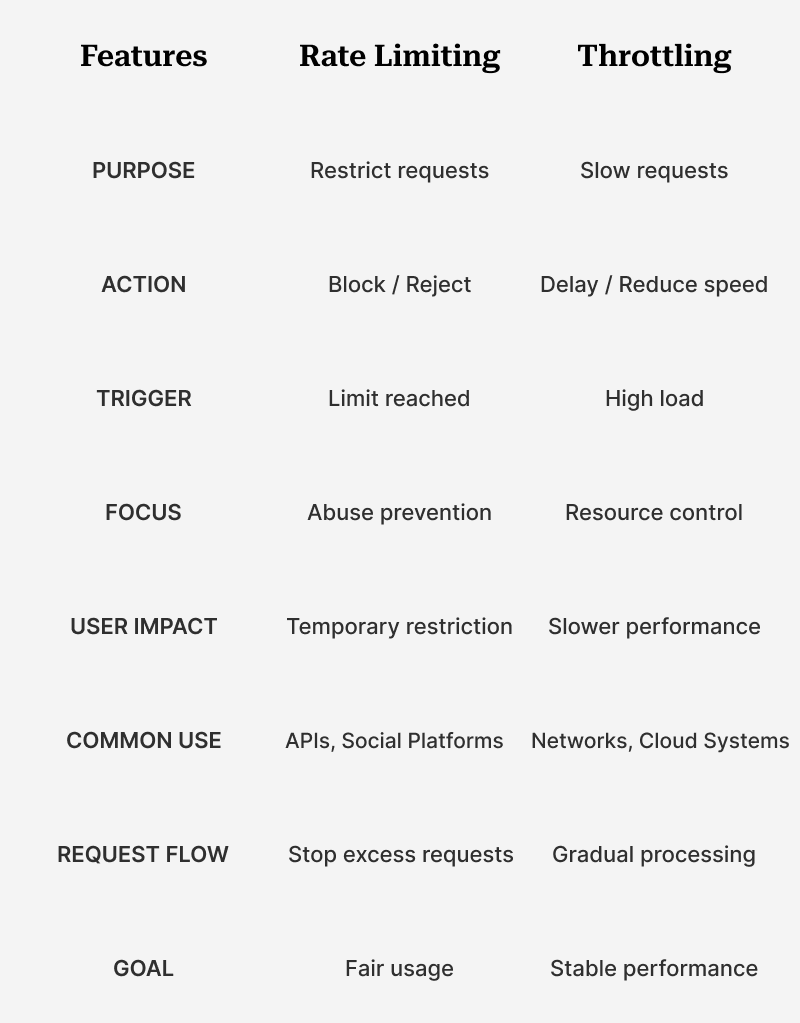
In simple terms, rate limiting determines whether requests are allowed, while throttling controls how quickly requests are processed. Many modern systems use both techniques together.
How Queue Systems Work with Rate Limiting

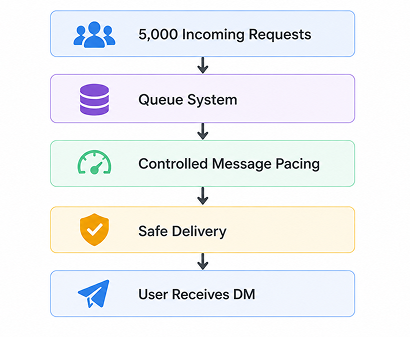
One of the most effective ways to work within rate limits is through queue systems. Instead of sending every request immediately, requests are placed into a queue and released gradually.
For example:
- A viral Instagram post generates 5,000 DM requests.
- Requests enter a queue.
- Messages are processed in controlled batches.
- Users continue receiving responses.
- Platform limits remain respected.
This approach helps maintain a natural flow of activity while supporting large-scale campaigns.
How LinktoDM Handles Rate Limiting
Managing large volumes of conversations requires more than automation alone. LinktoDM uses intelligent delivery mechanisms designed to help businesses scale DM campaigns safely and efficiently.
Smart Queue Management
Messages are distributed gradually instead of being sent simultaneously.
Controlled Pacing
Traffic is spread across time to create more natural activity patterns.
Scalable Infrastructure
Campaigns can continue operating even during significant traffic spikes.
Reliable Lead Capture
Businesses can continue collecting and nurturing leads without overwhelming messaging systems.

This allows creators, agencies, coaches, and businesses to focus on growth while maintaining stable automation performance.
Best Practices to Stay Safe
If you're using Instagram DM automation, these practices can help.
Prioritize Quality Over Volume
Meaningful conversations outperform excessive messaging.
Keep Automation Flows Simple
Shorter sequences often produce better engagement.
Monitor Viral Campaigns
High-performing content can dramatically increase messaging activity.
Use Trusted Automation Platforms
Choose tools designed with queue systems and pacing controls.
Respect Platform Policies
Working within platform guidelines reduces risk and improves long-term reliability.
Why Rate Limiting is Actually Good
Many people view rate limiting as a restriction. In reality, it helps create healthier and more sustainable systems.
Without rate limiting:
- Spam would increase dramatically
- Platforms would become unstable
- User experiences would suffer
- Automation abuse would become widespread
Rate limiting makes scalable automation possible. The most effective automation systems don't try to bypass limits — they work intelligently within them using queues, pacing controls, and traffic management strategies.
Conclusion
Rate limiting is one of the foundational technologies behind modern platforms, APIs, and automation tools. It helps maintain stability, prevent spam, and ensure a reliable user experience.
For businesses using Instagram DM automation, understanding rate limiting is essential for long-term growth. By combining intelligent queue systems, message pacing, and scalable infrastructure, automation platforms can safely handle large volumes of conversations without creating unnecessary risks.
The goal isn't simply to send messages faster. The goal is to deliver conversations consistently, efficiently, and responsibly. That's why modern automation platforms like LinktoDM focus on smart delivery systems that support growth while respecting platform limitations.

'%3e%3cpath%20d='M14.8156%200H1.18125C0.528125%200%200%200.515625%200%201.15313V14.8438C0%2015.4813%200.528125%2016%201.18125%2016H14.8156C15.4688%2016%2016%2015.4813%2016%2014.8469V1.15313C16%200.515625%2015.4688%200%2014.8156%200ZM4.74687%2013.6344H2.37188V5.99687H4.74687V13.6344ZM3.55938%204.95625C2.79688%204.95625%202.18125%204.34062%202.18125%203.58125C2.18125%202.82188%202.79688%202.20625%203.55938%202.20625C4.31875%202.20625%204.93437%202.82188%204.93437%203.58125C4.93437%204.3375%204.31875%204.95625%203.55938%204.95625ZM13.6344%2013.6344H11.2625V9.92188C11.2625%209.0375%2011.2469%207.89687%2010.0281%207.89687C8.79375%207.89687%208.60625%208.8625%208.60625%209.85938V13.6344H6.2375V5.99687H8.5125V7.04063H8.54375C8.85938%206.44063%209.63438%205.80625%2010.7875%205.80625C13.1906%205.80625%2013.6344%207.3875%2013.6344%209.44375V13.6344Z'%20fill='%23B1B1B1'/%3e%3c/g%3e%3cdefs%3e%3cclipPath%20id='clip0_6304_15414'%3e%3crect%20width='16'%20height='16'%20fill='white'/%3e%3c/clipPath%3e%3c/defs%3e%3c/svg%3e)

