





Managing direct messages can quickly become overwhelming for American and Canadian creators trying to grow on Instagram. Without a smart approach, important engagement opportunities slip through the cracks and manual replies eat up your creative time. Understanding how to track key performance metrics helps you build meaningful connections while working smarter. This guide walks you through tested automation strategies to enhance your audience relationships and support your follow growth goals.
Quick Summary
| Key Point | Explanation |
|---|---|
| 1. Define Clear Automation Goals | Establish specific objectives such as response rate improvement and audience engagement for effective DM automation. |
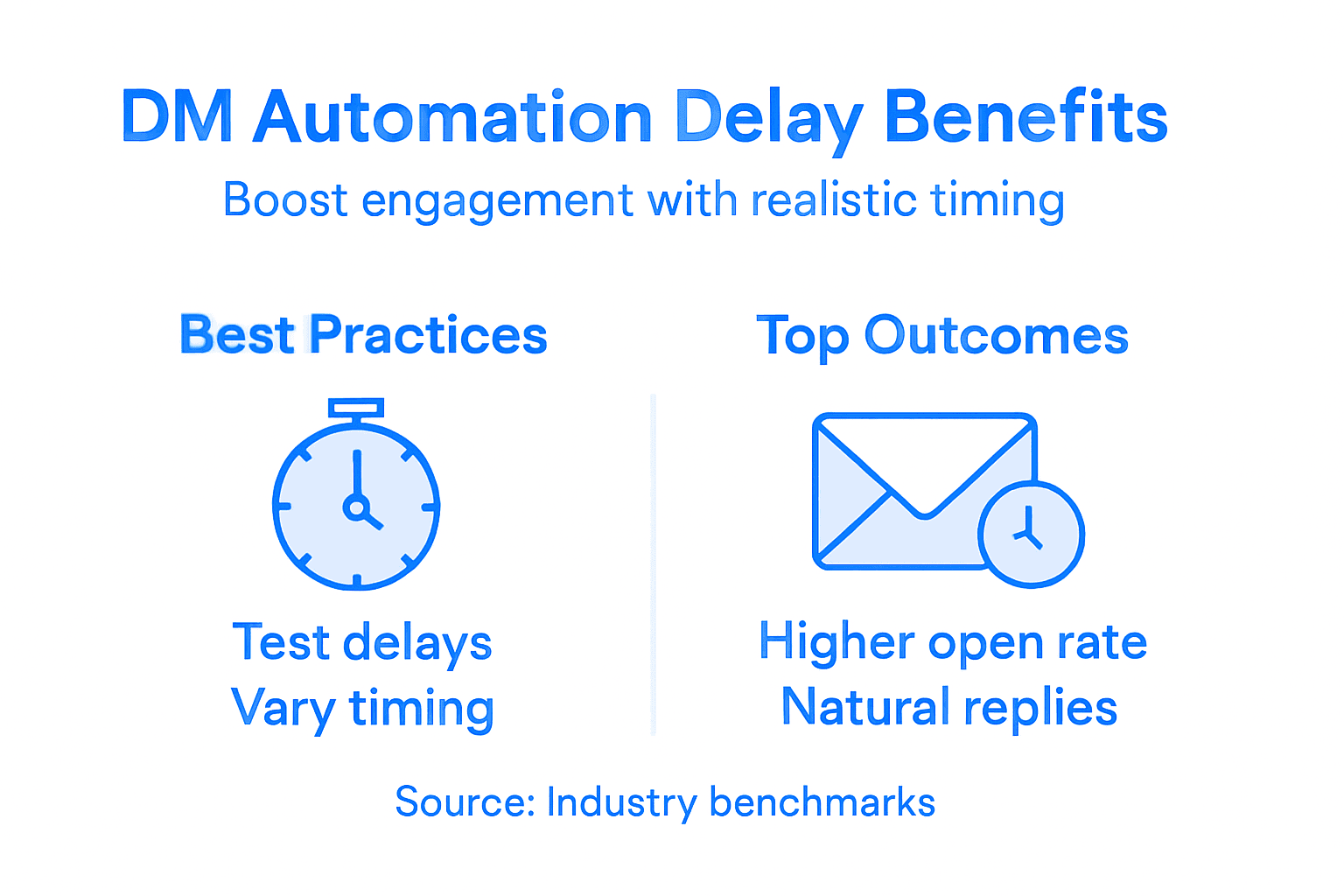
| 2. Implement Realistic Message Delays | Use strategic timing for responses to create a natural flow, varying response times based on interaction type. |
| 3. Schedule Campaigns During Peak Times | Analyze audience activity to send messages at optimal times, enhancing engagement and response rates. |
| 4. Utilize Metrics for Continuous Improvement | Track key metrics like open and conversion rates to identify successful message strategies and refine your approach. |
| 5. Adjust Delay Intervals Dynamically | Continuously monitor engagement and modify delays for authentic interactions, balancing timing to maintain audience interest. |
Step 1: Assess Your DM Automation Goals
Successfully automating direct messages requires a strategic approach to measuring engagement and setting clear objectives. Understanding how to track key performance metrics will help you optimize your Instagram interaction strategy.
Start by defining specific goals that align with your content creator profile. These might include:
- Increasing response rates
- Generating more meaningful follower interactions
- Reducing manual time spent managing messages
- Improving overall audience connection
Tracking DM automation metrics provides crucial insights into how your automated messages perform. These indicators reveal whether your messages effectively capture leads, drive engagement, or promote conversions through your sales funnel.
The most successful Instagram creators treat DM automation as a strategic tool, not just a time-saving mechanism.
To assess your goals effectively, consider measuring specific indicators like message open rates, response times, click-through rates, and conversion percentages. By establishing clear benchmarks, you can systematically improve your Instagram engagement strategy.
Here’s a summary of how different DM automation metrics reflect your strategy’s effectiveness:
| Metric | What It Shows | Business Impact |
|---|---|---|
| Open Rate | Audience interest in messages | Indicates message relevance |
| Response Time | Speed of audience reply | Reveals engagement promptness |
| Click-Through Rate | Link interaction level | Measures call-to-action strength |
| Conversion Rate | Actions after message | Gauges campaign ROI |
| Interaction Duration | Length of conversation | Shows audience engagement depth |
Pro tip: Start with modest automation goals and gradually expand your strategy as you understand your audience’s preferences and interaction patterns.
Step 2: Set Up Delay Intervals for Realism
Creating authentic automated direct messages requires strategic timing that mimics natural human interaction. Your goal is to design message delays that feel organic and prevent your account from appearing robotic.
When setting up delay intervals for DM automation, consider these critical factors:
- Vary response times between messages
- Avoid instantaneous replies
- Match typical human response patterns
- Simulate realistic conversation rhythms
Different interaction scenarios demand unique delay strategies. For fast-paced interactions like customer inquiries, shorter intervals work best. In more casual follower engagement, longer delays can create a sense of genuine conversation.
Authenticity in automated messaging comes from understanding subtle communication nuances.
Typical delay intervals range from 30 seconds to 5 minutes, depending on your specific engagement goals. Experiment with different timeframes to discover what feels most natural for your audience.

Use this table to choose the best delay intervals for your audience:
| Interaction Type | Recommended Delay | Expected Outcome |
|---|---|---|
| Customer Support | 30-60 seconds | Swift, helpful response |
| Follower Engagement | 1-3 minutes | Natural, friendly chat |
| Promotional Messages | 2-5 minutes | Non-intrusive delivery |
| Complex Queries | 2-4 minutes | Allows thoughtful answers |
Pro tip: Test multiple delay configurations and analyze audience response rates to find the most effective interaction rhythm for your Instagram community.
Step 3: Schedule DM Campaigns Strategically
Successful Instagram creators understand that timing is everything when automating direct message campaigns. Strategic scheduling can dramatically improve audience engagement and response rates.
To develop an effective campaign schedule, consider these key factors:
- Analyze your audience’s active hours
- Target peak engagement times
- Respect different time zones
- Avoid sending messages during sleep hours
Leveraging social media automation tips can help you design campaigns that feel personal and timely. Different audience segments might respond better to messages at specific times of day, so segmentation becomes critical.
Effective DM campaigns are less about quantity and more about delivering the right message at the right moment.
Implement a testing approach where you track message performance across various time slots. Some creators find morning and early evening windows generate the highest engagement rates, but your specific audience might vary.
Pro tip: Create multiple campaign schedules and rotate them to discover the most responsive timing patterns for your unique Instagram community.
Step 4: Test and Analyze Response Rates
Measuring the success of your direct message automation requires a systematic approach to tracking engagement metrics. Your goal is to understand how your audience interacts with automated messages and continuously improve your strategy.
Key metrics to track during your analysis include:
- Open rates for automated messages
- Response percentages
- Click-through rates
- Conversion rates
- Message interaction duration
Implement a controlled testing framework by creating multiple message variations and tracking their performance. This allows you to identify which communication styles and timing strategies generate the most meaningful audience engagement.
Small improvements in response rates can lead to significant growth in audience connection.
Consider using built-in Instagram analytics or third-party tracking tools to gather comprehensive data. Pay special attention to:
- Which message templates generate highest responses
- Optimal sending times for different audience segments
- Message length and content complexity
- Personalization impact on engagement
Pro tip: Create a spreadsheet to systematically log and compare your DM automation performance, tracking metrics across different campaign iterations to reveal actionable insights.
Step 5: Refine Delays for Optimal Results
Automated messaging requires continuous optimization to maintain a natural, engaging communication flow. Understanding how to dynamically adjust your delay intervals will help you create more authentic interactions with your audience.
Improve your delay strategy using these key approaches:
- Monitor audience response patterns
- Experiment with interval variations
- Analyze engagement metrics
- Adjust based on real-time feedback
Dynamic delay optimization allows you to balance promptness with natural conversation rhythms. Excessively short delays can feel robotic, while overly long intervals might cause audience disengagement.
Small, incremental adjustments can dramatically improve your message interaction rates.
Consider implementing a progressive refinement strategy where you:
- Start with baseline delay intervals
- Track initial response rates
- Make subtle timing adjustments
- Continuously measure performance changes
Pro tip: Create a flexible delay matrix that automatically adapts to different audience segments and interaction types, allowing for more nuanced and responsive automated messaging.
Boost Your Instagram Engagement with Smart DM Automation Delays
Struggling to create authentic, effective interactions through automated direct messages? This article highlights how well-timed delay intervals are key to avoiding robotic responses and improving audience connection. If your goal is to increase response rates, foster genuine conversations, and reduce manual effort without sacrificing quality then understanding and implementing strategic delays is essential.
LinktoDM offers a powerful suite of Instagram automation tools tailored for creators and influencers who want to master this balance. With features like AI-powered auto-replies, customizable delay settings, and in-depth engagement tracking you can design natural, timely DM campaigns that boost follower interaction while staying compliant with Instagram’s policies.
Discover how to automate DM delays the right way and leverage proven templates to maintain authentic communication. Start streamlining your Instagram growth today and transform your audience engagement by visiting LinktoDM now.
Frequently Asked Questions
Why should I use delay in DM automation?
Using delay in DM automation creates a more authentic interaction that mimics human conversation. To improve engagement, set your message delays between 30 seconds to 5 minutes depending on the interaction type, ensuring your responses don’t appear robotic.
How do I determine the best delay intervals for my audience?
To find the optimal delay intervals, monitor your audience’s response patterns and experiment with various timings. Start by testing different intervals for different types of interactions, and analyze which ones yield the highest engagement.
What metrics should I track to measure the effectiveness of my DM delays?
Key metrics to track include open rates, response times, and interaction duration. By systematically measuring these indicators, you can adjust your approach and improve engagement by at least 10% over the next campaign cycle.
How can I make my automated messages feel more natural?
To create more natural automated messages, vary the response times and avoid instant replies. Experiment with sending intervals that reflect typical human behavior, such as 1-3 minutes for follower engagement or 30-60 seconds for customer support.
How often should I refine my delay settings?
You should refine your delay settings regularly based on audience feedback and engagement metrics. Implement incremental adjustments every few weeks to gradually optimize interaction rates and maintain audience interest.
Can using too long of a delay negatively affect engagement?
Yes, excessively long delays might cause your audience to disengage or lose interest in the conversation. Aim for a balance by testing shorter intervals to maintain promptness without sacrificing the authenticity of the interaction.

'%3e%3cpath%20d='M14.8156%200H1.18125C0.528125%200%200%200.515625%200%201.15313V14.8438C0%2015.4813%200.528125%2016%201.18125%2016H14.8156C15.4688%2016%2016%2015.4813%2016%2014.8469V1.15313C16%200.515625%2015.4688%200%2014.8156%200ZM4.74687%2013.6344H2.37188V5.99687H4.74687V13.6344ZM3.55938%204.95625C2.79688%204.95625%202.18125%204.34062%202.18125%203.58125C2.18125%202.82188%202.79688%202.20625%203.55938%202.20625C4.31875%202.20625%204.93437%202.82188%204.93437%203.58125C4.93437%204.3375%204.31875%204.95625%203.55938%204.95625ZM13.6344%2013.6344H11.2625V9.92188C11.2625%209.0375%2011.2469%207.89687%2010.0281%207.89687C8.79375%207.89687%208.60625%208.8625%208.60625%209.85938V13.6344H6.2375V5.99687H8.5125V7.04063H8.54375C8.85938%206.44063%209.63438%205.80625%2010.7875%205.80625C13.1906%205.80625%2013.6344%207.3875%2013.6344%209.44375V13.6344Z'%20fill='%23B1B1B1'/%3e%3c/g%3e%3cdefs%3e%3cclipPath%20id='clip0_6304_15414'%3e%3crect%20width='16'%20height='16'%20fill='white'/%3e%3c/clipPath%3e%3c/defs%3e%3c/svg%3e)

